
Category Guides
Espresso machines are priced by temperature stability and pressure control
The visible differences between price bands are cosmetic. The engineering differences are in how steadily water arrives at the coffee and how repeatable that is.
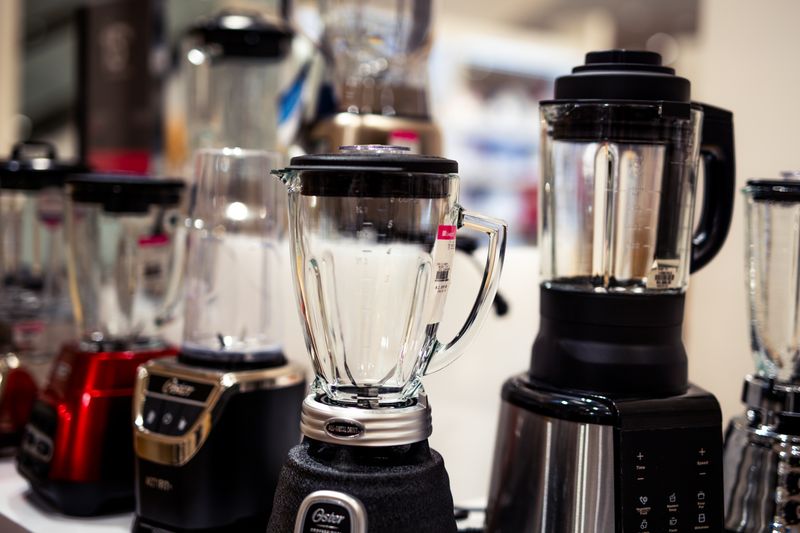
Everything here earned its place by changing an outcome. Nothing about espresso machine engineering is included to round the number up.
What matters most
- Boiler architecture determines temperature stability.
- Pump pressure specifications describe maximum, not brewing pressure.
- The grinder matters as much as the machine.
Why temperature stability is the central problem
Extraction is sensitive to water temperature, and a swing of a few degrees changes the balance of the resulting cup noticeably. A single boiler heats water for both brewing and steaming at different temperatures, so it must cycle between them and cannot do both at once. A heat exchanger draws brew water through a tube passing through a steam boiler, which allows simultaneous operation with some temperature variation.
Dual boiler machines use separate vessels held at separate temperatures, which is the most stable and the most expensive arrangement. Thermoblock and thermocoil systems heat water on demand and vary in stability depending on mass and control sophistication.
The pressure figure on the box
Pumps are commonly advertised at fifteen or nineteen bar, which describes the pump's maximum output against a closed valve. Brewing takes place at a much lower pressure, conventionally around nine bar, regulated by an over-pressure valve inside the machine. A higher pump rating therefore indicates nothing about brewing performance and has become a category headline number.
Machines that let the user adjust brew pressure, or that profile pressure through a shot, are doing something the number cannot express. Vibratory and rotary pumps differ in noise, size and ability to plumb into a water supply rather than in achievable pressure.
Where the shot is really decided
Grind consistency governs how evenly water passes through the coffee bed, and an inconsistent grind produces channelling that no machine can correct. Burr grinders produce a far narrower particle distribution than blade grinders, and burr size and alignment separate grinders within that category.
Compared like for like, grind adjustment must be fine enough near espresso settings, since a single step being too coarse makes a machine unusable at that setting. This is why experienced advice consistently allocates a large share of a budget to the grinder rather than the machine. Dose consistency and distribution technique change the result as much as equipment does, which is an inconvenient truth for anyone buying their way to better coffee.
Group head design and thermal mass
The group head is the metal assembly the portafilter locks into, and its mass buffers temperature between shots. Saturated group heads circulate boiler water through the group continuously, keeping it at a stable temperature without warm-up routines.
In the small print, lighter group heads reach temperature faster and lose it faster, which shows in the second and third consecutive shot. Pre-infusion, whether mechanical or programmed, wets the coffee at low pressure before full pressure arrives and reduces channelling. These are the details that explain why two machines with identical pumps and boilers behave differently in a queue of drinks.
Serviceability and the long view
Espresso machines are among the more repairable appliances, with gaskets, showers screens, valves and pumps commonly available as parts. Group gaskets and shower screens are routine replacements, and needing them is maintenance rather than failure.
Judged against the category, scale is the principal enemy of any machine with a boiler, and water hardness locally determines how quickly it accumulates. Machines built around standard commercial components are supportable for decades, while heavily integrated designs with proprietary electronics are not. A published parts diagram and a network of independent repairers are the strongest signals that a machine has a long life ahead of it.
Where a claim here has not been tested directly it is inference, and it should be read as inference.
Choosing without a recommendation
Decide how many drinks you make consecutively, since that single question separates single boiler machines from the rest. Decide whether milk drinks matter, because steaming demand is what makes boiler architecture a live question.
Budget the grinder first and the machine second, and accept that this ordering feels wrong and is widely endorsed by people who make coffee daily. Check water hardness locally and plan for softening or descaling before purchase rather than after the first fault. This site does not pull shots to compare machines, so temperature logging tests and long-term owner reports are the useful evidence.
Everything above, in order of what to do first
- Why temperature stability is the central problem. Extraction is sensitive to water temperature, and a swing of a few degrees changes the balance of the resulting cup noticeably.
- The pressure figure on the box. Pumps are commonly advertised at fifteen or nineteen bar, which describes the pump's maximum output against a closed valve.
- Where the shot is really decided. Grind consistency governs how evenly water passes through the coffee bed, and an inconsistent grind produces channelling that no machine can correct.
- Group head design and thermal mass. The group head is the metal assembly the portafilter locks into, and its mass buffers temperature between shots.
- Serviceability and the long view. Espresso machines are among the more repairable appliances, with gaskets, showers screens, valves and pumps commonly available as parts.
- Choosing without a recommendation. Decide how many drinks you make consecutively, since that single question separates single boiler machines from the rest.
The takeaway
Buy stability and grind consistency; the pressure number on the box is describing a valve, not a cup.
Anything you cannot buy a spare part for is a rental with a long term.
Questions readers ask
Is a 19 bar pump better than a 15 bar pump?
No. Both figures describe maximum pump output against a closed valve, while brewing happens at roughly nine bar regulated internally. The number is a marketing figure.
Machine or grinder first?
Most experienced advice puts the grinder first, because grind consistency limits what any machine can extract and no machine corrects a poor grind.
Also by Shalini Varma
- Water-resistant, weatherproof and splashproof are words, not ratingsReading the Spec
- Duty cycle is the number that decides whether a tool survives the jobReading the Spec
- Every category has one number that is cheap to increaseReading the Spec
- Advertised weight leaves out the parts that make it workReading the Spec


