
Durability & Repair
Things break at a load they have carried a thousand times before
A component that has survived a force repeatedly can fail at that same force without warning. Fatigue is a counting process, and the count is invisible from outside.
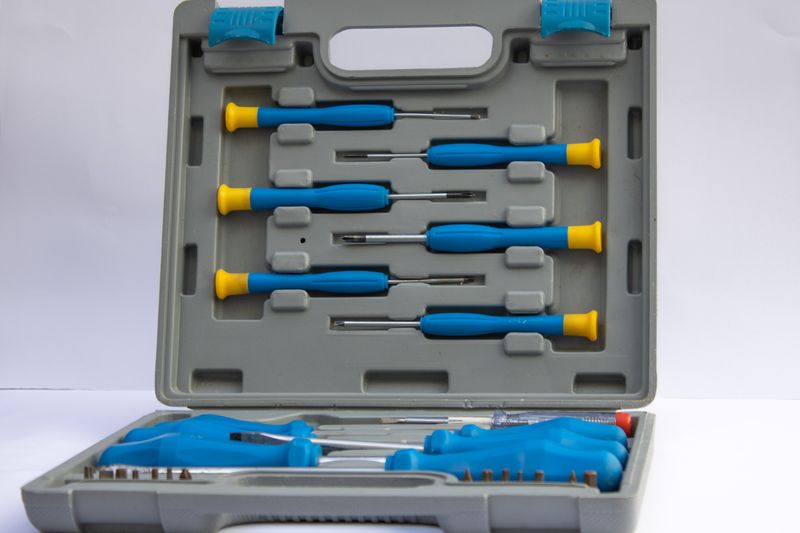
This looks at fatigue failure in everyday objects from the practical end — what holds up once conditions stop being ideal.
What holds up in practice
- Repeated loading initiates cracks below the static strength.
- Stress concentrates at holes, corners and scratches.
- Some materials have no safe stress level at all.
What fatigue actually is
Materials under repeated loading accumulate microscopic damage even when every individual load is far below what would break them once. That damage eventually forms a crack, which then grows a small amount with each subsequent cycle until the remaining material cannot carry the load. The final fracture is sudden because the crack growth phase is silent and the failure happens when the section becomes too small.
This is why a part that has performed for years can fail during entirely ordinary use with nothing unusual having happened. Fatigue is measured in cycles rather than in time, so a lightly used item can outlive a heavily used one of the same age.
Where cracks start
Stress concentrates wherever the flow of force through a part is interrupted, which means holes, sharp internal corners and abrupt changes of section. Designers use generous radii precisely to spread that concentration, and a sharp corner where a radius should be is a visible design weakness.
In the small print, surface scratches, tool marks and stamped lettering all act as small stress raisers and are common initiation sites. Corrosion pits do the same thing chemically, which is why corrosion and fatigue together are far worse than either alone. Welds and joints concentrate stress by changing both geometry and material properties in the same small region.
Why the material matters
Some steels exhibit a stress level below which fatigue life becomes effectively unlimited, which allows a design to be genuinely permanent. Many other materials, including common aluminium alloys, show no such threshold, so every cycle contributes damage regardless of how small the load is.
That difference explains why some aluminium components are given a defined service life while their steel equivalents are not. Polymers and composites fatigue by different mechanisms and are additionally sensitive to temperature and to environmental exposure. Because the behaviour differs so much by material, no general rule about how long a part should last survives across categories.
Surface condition and residual stress
Processes that put the surface into compression, such as shot peening and rolling, delay crack initiation substantially. Machining, grinding and heat treatment can leave the surface in tension instead, which has the opposite effect.
Judged against the category, plating and coating processes sometimes introduce hydrogen into steel, which embrittles it, and controlled baking is used to reverse that. This is why an apparently cosmetic refinishing operation on a loaded component can change its fatigue behaviour.
It is also why replacing a structural fastener with a similar-looking one of unknown origin is a poor idea.
Where you meet fatigue in ordinary products
Anything that flexes repeatedly is a candidate, including hinges, springs, brackets, cables, handles and the frames of folding items. Rotating shafts experience a full stress reversal every revolution, so cycle counts accumulate extremely quickly.
Compared like for like, vibration adds cycles at high frequency, which is why vibrating equipment fatigues its own mountings and fixings. Thermal cycling produces the same effect through expansion and contraction, particularly where two materials of different expansion rates are joined. Load-bearing plastic parts creep as well as fatigue, so they deform permanently before they crack.
Where a claim here has not been tested directly it is inference, and it should be read as inference.
What you can actually watch for
Look for fine cracks radiating from holes, corners and welds, since visible cracking means the growth phase is already advanced. Changes in stiffness, new noises and increased free play can all indicate a partially cracked component. Where a manufacturer publishes an inspection interval or a service life for a component, it is describing a fatigue calculation.
Treat any structural or safety-related component that has been overloaded once as suspect, because a single overload can initiate a crack. For anything carrying a person or a heavy load, inspection and replacement intervals are a matter for the manufacturer's instructions and local regulation.
The takeaway
Look for cracks at holes, sharp corners and welds, because that is where repeated loading starts its work.
Buy for the failure you can live with, not the feature you will use twice.
Questions readers ask
Why did a part fail doing something it had done for years?
Fatigue accumulates with each loading cycle, and a crack grows silently until the remaining material cannot carry the load. The final failure is sudden because the growth phase is invisible.
Do all materials have a safe stress level?
No. Some steels have a threshold below which life is effectively unlimited, while many aluminium alloys and polymers accumulate damage at any stress level.
Also by Yusuf Baig
- Vacuum cleaners: airflow, sealed suction and the leaks between themCategory Guides
- Cookware is a compromise between conductivity, mass and how you cookCategory Guides
- In small kitchen appliances the plastic gear is a deliberate fuseCategory Guides
- Printers are sold as machines and bought as a supply contractCategory Guides


