
Durability & Repair
A finish is a sacrificial layer with a life of its own
Paint, plating and anodising are not decoration attached to a product. They are a barrier with a defined thickness, and once it is breached the material underneath is exposed.
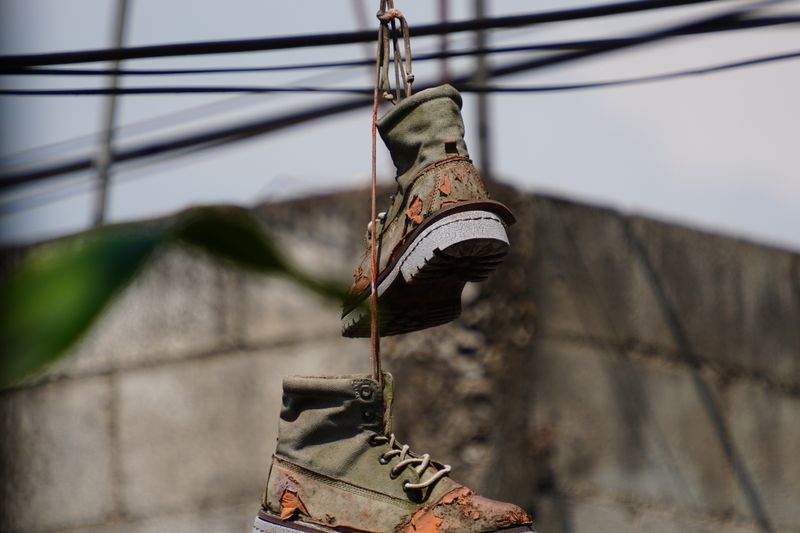
Most explanations of surface finishes and coatings stop at the point where it starts to matter. This one carries on.
The short version
- A finish is a barrier measured in thickness.
- Edges and fasteners lose coating first.
- Repairing a breach early stops it spreading.
What a finish is for
Most finishes exist to keep moisture, oxygen and contaminants away from a substrate that would otherwise corrode, degrade or stain. A finish is therefore best understood as a consumable barrier of a certain thickness, not as a permanent property of the object. Once the barrier is breached, corrosion proceeds underneath and can spread laterally beneath intact coating, lifting it from the edges of the damage.
This is why a small chip left alone often becomes a large flake, and why early touch-up is disproportionately effective. Decorative and protective functions frequently conflict, since the glossiest finishes show every scratch and the toughest ones rarely look expensive.
Painted and powder-coated surfaces
Wet paint systems build a film from a primer that adheres and a topcoat that resists the environment, and each layer has a distinct job. Powder coating applies a dry polymer electrostatically and then fuses it in an oven, producing a thicker and generally tougher film than most wet systems. Preparation determines adhesion far more than the coating itself, so a poorly cleaned or unetched substrate will shed even an excellent finish.
Compared like for like, powder coatings resist impact and abrasion well but cannot be locally repaired, since the repair requires heat the assembled product cannot take. Thin coating on sharp edges is a physical inevitability, because surface tension pulls liquid and molten films away from any convex corner.
Anodising and conversion coatings
Anodising converts the outer layer of aluminium into a hard oxide that is part of the metal rather than a film sitting on top of it. Because the layer is grown rather than applied, it cannot chip off in flakes, though it can be worn through and can craze if the metal is bent.
Thicker hard anodising resists wear substantially better than decorative anodising, and the two are frequently described using the same single word. Dyed anodising holds colour in the pores of the oxide layer, and ultraviolet exposure fades some dyes considerably faster than others. Conversion coatings on steel and zinc work similarly by chemically altering the surface, and they usually form a base for further coating rather than a final answer.
Plating and why thickness decides everything
Electroplating deposits a thin metal layer, and the corrosion protection it provides is close to proportional to how thick that layer is. Decorative plating can be extremely thin, which looks identical to a durable plating on the shop floor and behaves completely differently within a year. Some platings protect sacrificially, corroding preferentially to save the metal underneath, while others protect only as a barrier and worsen matters once breached.
The measurable part is this: plating thickness is almost never published on consumer goods, which makes it one of the least visible cost reductions available to a manufacturer.
Where a maker specifies a plating standard or thickness on a product that is not industrial, it usually signals a genuinely different specification.
Where finishes fail first
Edges, corners and radii carry thinner coating and take more impact, so failure begins there in almost every category. Fastener heads are struck by tools during assembly and service, which removes coating precisely where dissimilar metals are already in contact. Contact points where two parts rub, such as hinges, latches and stacking surfaces, wear through by abrasion rather than by chemistry.
The measurable part is this: trapped moisture beneath seals, feet and gaskets attacks from the side you cannot inspect, which is why failure often appears fully formed. Cleaning chemistry is an underrated cause, because alkaline cleaners attack some coatings and abrasive pads remove them outright.
Judging a finish before you own it
Inspect edges and internal corners rather than the display face, since those areas show the coating process rather than the marketing. Look inside openings and behind removable panels, because an unfinished interior on an item destined for damp conditions is a meaningful omission.
Ask whether touch-up material is sold, as its availability tells you both that damage is expected and that repair is intended. Consider the environment honestly, because coastal air, road salt and pool chemistry defeat finishes that perform indefinitely elsewhere. Where a product will live outdoors, a repairable coating that can be maintained often outlasts a tougher one that cannot be touched up.
The takeaway
Treat a finish as a barrier with a thickness, inspect the edges, and repair breaches while they are small.
The question is rarely which is best. It is which is enough.
Questions readers ask
Is powder coating always better than paint?
It is generally thicker and tougher, but it cannot be repaired locally because the repair needs oven heat. On items that will be chipped and touched up, a repairable wet system can last longer in practice.
Why does rust spread under paint?
Corrosion continues in the breach and its products occupy more volume than the metal did, lifting the coating from the edge of the damage. Treating a chip early stops that process.
Also by Yusuf Baig
- Vacuum cleaners: airflow, sealed suction and the leaks between themCategory Guides
- Cookware is a compromise between conductivity, mass and how you cookCategory Guides
- In small kitchen appliances the plastic gear is a deliberate fuseCategory Guides
- Printers are sold as machines and bought as a supply contractCategory Guides


